
What a CV Is and Is Not
A CV’s purpose is to get you an interview. Learn what a CV should (and shouldn’t) include, how to showcase your strengths, and how to tailor it to land more opportunities.
- | 6 min read
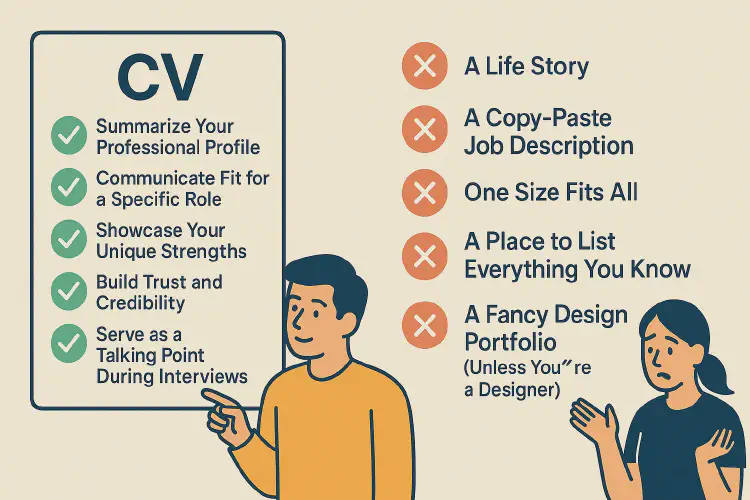
The purpose of a CV is simple but powerful: to get you an interview.
It’s not meant to land you the job on its own. Instead, it works as your ticket to a conversation: a chance to get your foot in the door so you can show employers who you are beyond the paper. Yet many candidates misunderstand what a CV should actually do. A strong CV is a marketing document, not a biography, and definitely not just a list of everything you’ve ever done.
Let’s break down what a CV is, and just as importantly, what it is not.
✅ What a CV Is
1. Summarize Your Professional Profile
A good CV offers a quick snapshot of who you are as a professional. It highlights your skills, experience, education, and achievements in a way that tells a story. Recruiters should be able to glance at the top section and instantly understand what you bring to the table.
For example, if you’re a junior developer, you don’t just write “Python, SQL, Excel.” Instead, you frame it as: “Aspiring data analyst with hands-on experience using Python and SQL to clean and analyze real-world datasets.” This shifts your CV from a list of tools to a cohesive profile of your potential value.
2. Communicate Fit for a Specific Role
One of the biggest mistakes candidates make is sending the same CV to every job. A strong CV is tailored. It should show that you understand what the employer is looking for and that you meet, or ideally exceed, their requirements.
This doesn’t mean rewriting everything from scratch, but it does mean adjusting your wording. If the role emphasizes teamwork, highlight a group project. If it asks for Excel and dashboards, showcase that project before your generic coursework.
Smart tailoring also helps you beat Applicant Tracking Systems (ATS), since using keywords from the job description increases your chances of getting through the first filter.
3. Showcase Your Unique Strengths
Your CV is also the place to emphasize what makes you different from other applicants. Employers see countless “to-do list apps” or “student projects,” but you stand out by showing how you went a step further.
Did you add features that weren’t in the tutorial? Did you solve a specific problem in a creative way? Do you have certifications, extra languages, or volunteer experience that add another dimension to your profile? These unique strengths tell a recruiter, “This candidate has initiative. They don’t just do the bare minimum.”
4. Build Trust and Credibility
At its core, a CV is about trust. Employers don’t know you yet; they only know what’s on the page. A sloppy CV with typos, inconsistent dates, or confusing formatting can instantly raise doubts.
On the other hand, a well-written, polished CV signals professionalism and attention to detail. When your information is factual, consistent, and easy to scan, it builds credibility. Recruiters think, “If this person took care in presenting themselves, they’ll likely bring the same care to the job.”
5. Serve as a Talking Point During Interviews
A strong CV doesn’t just get you into the interview; it helps you navigate it. Many interviewers literally walk through your CV line by line. Every bullet point you include is a potential conversation starter.
That means you can guide the interview by choosing what to emphasize. If you highlight projects you’re proud of, that’s what interviewers will ask you about. Instead of scrambling to remember minor details, you’ve already curated the topics that play to your strengths. In other words, a good CV lets you control the narrative.
🚫 What a CV Is Not
1. A Life Story
Your CV is not a complete autobiography. Employers don’t need to know about every job you’ve ever had since high school. What they want is the relevant story: the experiences and skills that connect to the role you’re applying for. Think of your CV as a brochure: it’s not about everything you’ve done, but about why you’re the right person for this job.
2. A Copy-Paste Job Description
Recruiters don’t want to see bullet points that look like they’ve been lifted word-for-word from a job posting. Writing “Responsible for updating spreadsheets” says nothing about your impact. Instead, you need to show results: “Automated monthly sales report in Excel, reducing reporting time by 30%.” That tiny shift proves that you made a difference.
3. One Size Fits All
Sending one generic CV to every company is a recipe for getting ignored. Different roles emphasize different skills, so your CV should shift accordingly. A data analyst application should highlight SQL queries and visualization projects, while a business analyst role might emphasize stakeholder communication and requirements gathering. Even small adjustments show recruiters that you took the time to apply with intention.
4. A Place to List Everything You Know
Listing every tool or programming language you’ve ever touched doesn’t make you look skilled. Instead, it makes you look unfocused. Employers want to know what you’re comfortable using on the job today, not what you “once tried in a course.” A curated skills section signals self-awareness and honesty, which goes further than a laundry list.
5. A Fancy Design Portfolio (Unless You’re a Designer)
While flashy templates might look good on Pinterest, most recruiters (and ATS systems) prefer clarity over creativity. Unless you’re applying for a design-heavy role, stick to clean, professional formatting that allows hiring managers to find key information quickly. A simple layout signals professionalism.
6. A Formal Academic Biography
An academic CV full of degrees, coursework, and papers works for research roles, but in most industries, recruiters want a professional marketing document. That means focusing on practical achievements, real-world projects, and employable skills—not just listing classes you took.
7. Your Only Application Material
Your CV matters, but it’s just one piece of your toolkit. Employers often check your LinkedIn profile, GitHub, or portfolio before making a decision. A cover letter may also strengthen your case. And of course, the interview itself can outweigh anything written on paper. Think of the CV as the entry point, not the entire package.
8. A Place to Be Modest
Finally, your CV is not the time for humility. This doesn’t mean bragging—it means presenting your value with confidence and evidence. If you improved a process, built something useful, or achieved results, put it in writing. Modesty won’t help you get an interview. Clarity, evidence, and confidence will.
✅ Final Takeaway
Your CV is not about telling your entire life story. Instead, it’s about showing why you’re ready for this job. Think of it as your professional brochure: clear, relevant, and convincing enough to earn you a chance to talk.
👉 Discover our tech training programs
👉 See student reviews and success stories