
Looking Back, Moving Forward: 5 Data Analytics Lessons from 2025
A look back at 2025 reveals the practical lessons beginners can use to build stronger analytics skills in 2026.
- | 5 min read
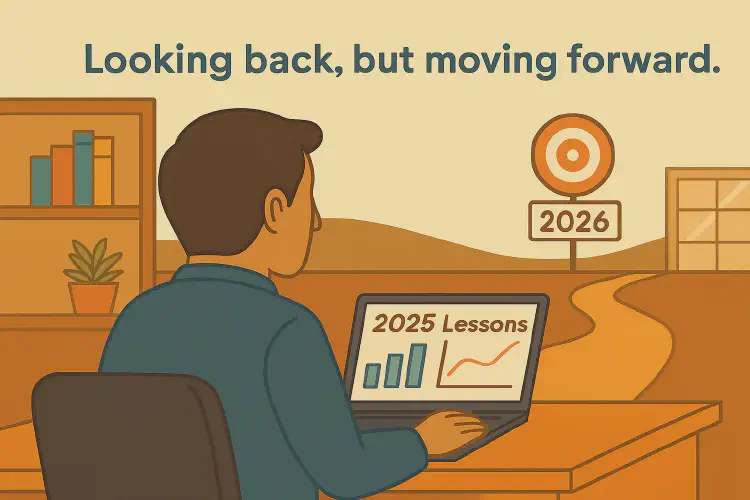
Every year in analytics leaves behind a trail of successes, missteps, and quiet lessons, and 2025 was no exception. While the field continued evolving at its usual pace with new tools launching and existing ones maturing, many beginners found themselves discovering a common truth: the core of analytics does not change as fast as the tools around it. What does change, however, is our understanding of how to work with data in a more thoughtful, effective, and sustainable way.
As we look toward 2026, there’s value in pausing to reflect on the fundamentals that defined this year. The lessons below are precisely the kind of insights that separate analysts who grow consistently from those who get lost chasing trends. Whether you’re just starting or refining your foundation, these observations from 2025 offer a reliable path forward.
1. Don’t Fear Messy Data, Learn to Manage It
If 2025 taught analysts anything, it is that waiting for clean, perfectly structured data is a luxury few teams can afford. Whether you were working with customer feedback, operational logs, or marketing performance reports, the reality remained the same: most datasets arrive incomplete, inconsistent, or wrapped in their own quirks.
For beginners, this often becomes a point of frustration, but the lesson is straightforward. What matters is not chasing perfection but developing the judgment to determine what needs fixing and what simply needs documenting. Analysts who embraced messy datasets early on learned to diagnose problems faster, decide what level of cleaning was sufficient for the business question, and move from theoretical analysis to practical results. The ability to manage imperfection without being paralyzed by it became one of the most valuable skills of the year.
2. Tools Matter, but Workflow Matters More
During 2025, we saw a predictable rise in new tools and frameworks promising faster insights and smoother pipelines. Yet, the analysts who made the most progress were not the ones who learned the most tools. They were the ones who learned how to structure their workflow: how to break a problem into steps, how to validate assumptions early, and how to design a repeatable process they could trust under pressure.
Many beginners discovered that an organized workflow often solved problems more efficiently than jumping between tools. BI dashboards became easier to build when the underlying questions were clear. Python scripts became cleaner when analysts spent time outlining the logic first. Even SQL became more intuitive when queries were structured with a methodical thought process in mind.
In other words, tools amplify your thinking, but they cannot replace a disciplined workflow. That was one of the quiet but constant themes throughout the year.
3. Communication Consistently Outperformed Complexity
Across industries, another pattern emerged: teams valued analysts who could explain insights clearly, not those who attempted overly technical or convoluted presentations. Stakeholders wanted meaningful narratives, straightforward takeaways, and clear implications for action.
In 2025, beginners often learned the hard way that presenting a complex chart without context did little for decision-making. On the other hand, analysts who focused on clarity, using simple language, providing comparisons, and clearly articulating what the data suggested, became trusted voices within their teams.
This trend will continue in 2026. The ability to turn data into a coherent story remains one of the most reliable ways to stand out, regardless of your technical depth.
4. Curiosity was still the Sharpest Analytical Tool
Despite the flood of automation tools, the analysts who consistently delivered high-quality work were the ones who asked better questions. Curiosity shaped hypotheses, improved data exploration, and revealed insights that surface-level reporting could not.
In 2025, many analysts realized that data analysis rarely starts with a dashboard; it starts with a question that challenges assumptions. Questions such as: Why did this metric change? What’s the underlying pattern? What does this result imply about user behavior? Those who leaned into this mindset found themselves progressing faster, even when they were still learning the technical side.
Curiosity strengthened every other skill. It guided decisions, helped structure workflows, and made communication more meaningful. As we move toward 2026, cultivating this habit may be the simplest and most strategic investment beginners can make.
5. Small Projects Built more Confidence than Big Ambitions
Another recurring theme in 2025 was the realization that many beginners tried to take on overly ambitious analytics projects, sometimes driven by online pressure to produce impressive portfolios. Those who shifted their focus toward smaller, manageable projects ultimately grew quicker.
Small analyses forced beginners to practice essential skills repeatedly: framing questions, preparing data, running exploratory analysis, and communicating results. Over time, these projects compounded into confidence and competence. On the other hand, overly large or complex projects frequently led to frustration, unfinished work, or confusion about next steps.
The lesson is not to think small, but to grow steadily. Progress in analytics is built on consistent iteration, not dramatic leaps.
Moving Forward into 2026 with Linero Tech
While 2025 produced its share of new trends, these five lessons reflect the underlying habits that truly helped beginners advance. You don’t need flawless data, an encyclopedic list of tools, or highly technical presentations to succeed in analytics. What you need is practical judgment, a structured workflow, clear communication, genuine curiosity, and enough restraint to choose projects that help you learn rather than overwhelm you.
These principles shaped the analysts who advanced in 2025, and they will continue shaping those who thrive in the years ahead. If you’re preparing to start your journey in 2026, Linero Tech is the best place to start. Our Data Analyst program focuses on the fundamentals that matter and helps you develop them through guided, hands-on practice.
👉 Discover our tech training programs
👉 See student reviews and success stories